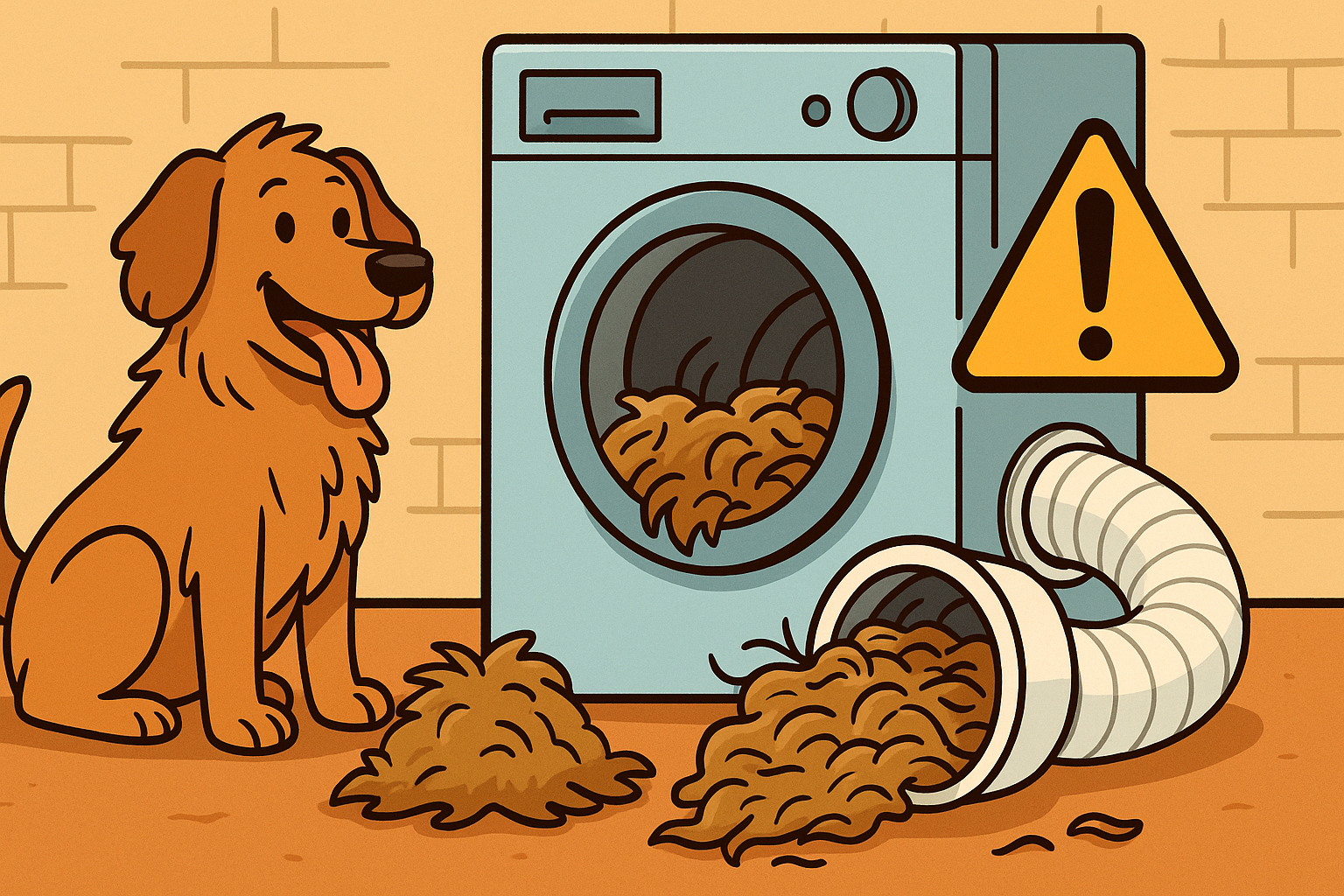
If you’re one of the thousands of pet-loving families in Ocala, there’s something in your home you likely haven’t thought twice about — but it could be putting your dryer, your wallet, and even your safety at risk.
We’re talking about pet hair in your dryer vent.
Whether you’ve got a golden retriever who sheds like it’s his job or a pair of indoor cats whose fur somehow ends up everywhere, this article is for you. At Ocala Drymaster, we’ve cleaned vents across Marion County and seen firsthand how much damage pet fur can cause inside your dryer system — and how preventable it is.
Let’s dig into:
Ocala and the surrounding areas are full of animal lovers. From dog parks like Letty Towles to equestrian neighborhoods and rural homesteads with indoor/outdoor pets, we live in a region that embraces furry companions.
But here’s what most people don’t realize:
Pet hair behaves differently than lint — and your dryer vent wasn’t designed to handle it.
When you wash and dry clothing, towels, or pet bedding, fur sheds off and gets sucked into the lint trap. But the lint trap doesn’t catch it all. The rest travels down the dryer vent where it mixes with lint, moisture, and dust.
This creates:
Pet hair doesn’t just reduce dryer efficiency — it can ignite.
Mixed with dry lint and heated air, fur becomes a highly flammable material. In several Ocala homes we’ve serviced, pet hair made up more than half of the vent blockage.
Here’s how it happens:
And unlike lint alone, fur tends to stick to vent walls and corners, making it more likely to remain even after partial cleanings.
It’s not just about fire — it’s about the air you breathe.
Pet hair in your vent system acts like a trap for:
Every time you run your dryer, some of these contaminants can re-enter your home through tiny leaks in the duct or exhaust system — especially in older homes around Ocala.
If that sounds familiar, your dryer vent could be part of the problem.
One of our recent clients in Marion Oaks, an animal rescue volunteer, noticed her dryer was taking nearly two hours to dry a load. She’d cleaned the lint trap religiously and even vacuumed behind the machine.
But we found:
She had no idea pet hair was sneaking past her filter. After our full cleaning, her drying times dropped by half — and the musty smell disappeared within a day.
Even if you don’t have a shedding breed, these red flags might mean fur is piling up in your vent:
If you see any of these signs, don’t wait — clogged vents are more than a nuisance. They’re dangerous and expensive. Get your Dryer Vents cleaned today!
Dryers work by pulling air from the inside, heating it, and pushing it out through the vent. When pet fur builds up, the system struggles to breathe.
This leads to:
Ocala residents pay an average of $0.14/kWh — meaning longer drying cycles could be costing you $20–$40 per month in wasted energy.
You don’t have to choose between loving your pet and protecting your home. Here’s how to stay ahead of the fur:
These help pull fur off clothes and into the lint trap.
Not just a quick swipe — do a full wipe, and clean with soap monthly.
Run an empty rinse cycle afterward to remove lingering fur.
Pet hair can cling to the drum and get re-circulated during drying.
Fur collects in corners and gets pulled in through the vent intake.
If you have pets that shed, make it every 6 months.
While there are kits sold for DIY dryer vent cleaning, they have major limitations — especially for homes with pets.
Common problems:
That’s why at Ocala Drymaster, we use commercial-grade rotating brushes, HEPA vacuums, and high-powered blowers to pull out even the most stubborn pet hair clogs.
As a local company based right here in Ocala, we understand the unique challenges of living in Central Florida with pets.
Whether you’ve got a farm dog in Fort McCoy or a pampered indoor Persian in Silver Springs Shores, we’re ready to help you keep your home safe, clean, and efficient.
Don’t let fur silently build up in your dryer vent. Whether you’ve got one dog, a few cats, or a full pet-loving household, now’s the time to make safety a priority.
It’s fast, affordable, and could prevent a major fire or costly repair.