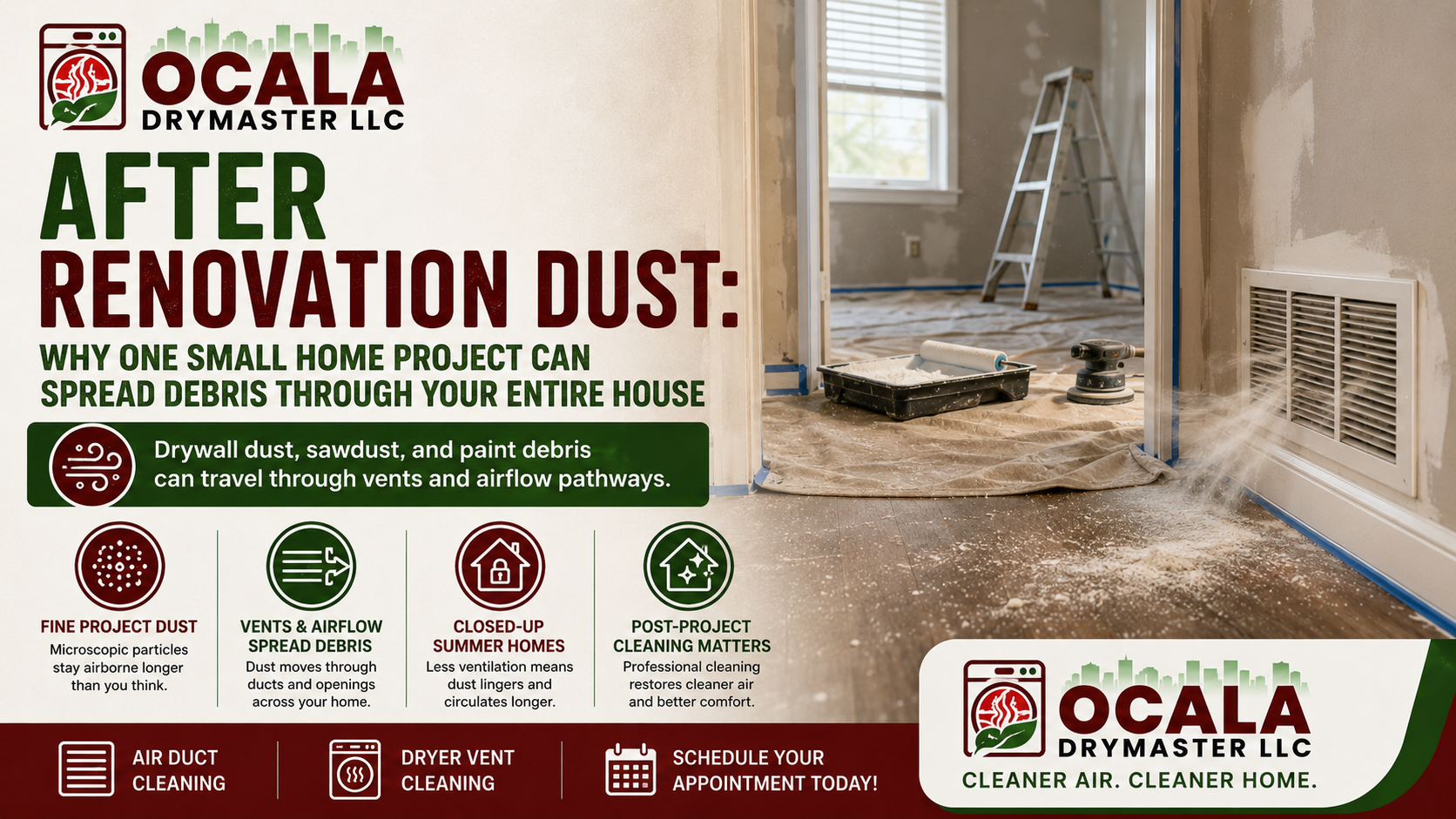
A small home project can feel simple at first.
You repaint a bedroom. Replace flooring. Patch drywall. Sand trim. Install new shelves. Maybe you remodel one bathroom or update a laundry room.
But once the work is done, many homeowners notice something frustrating: dust seems to show up everywhere.
That is because after renovation dust does not always stay in the room where the project happened. Fine debris can travel through airflow patterns, settle near vents, move through return ducts, and spread into areas that were never part of the project.
For Ocala homeowners, this matters even more during summer when air conditioning systems run constantly and homes stay closed up against Florida heat.
Here’s why one small project can affect the entire home — and what to check afterward.
Renovation dust is different from everyday dust.
Normal household dust usually comes from fabrics, skin cells, pet dander, pollen, and outdoor debris. Renovation dust can include much finer particles from materials like:
These particles can stay airborne longer than heavier debris. Once the HVAC system turns on, air movement can pull fine dust toward return vents and circulate it throughout the house.
This is why one room project can leave dust on surfaces in nearby bedrooms, hallways, or living areas.
If your home already seems dusty again shortly after cleaning, this related article may help explain the pattern: The Invisible Dust Cycle: Why Your Home Gets Dusty Again Days After Cleaning.
Return vents are designed to pull indoor air back into the HVAC system.
During or after a renovation project, those vents may also pull in dust from the work area — especially if the system runs while sanding, cutting, painting, or cleanup is happening.
Once dust reaches the return side, it may collect inside:
Professional Residential & Commercial Air Duct Cleaning can help address buildup inside the airflow system that normal vacuuming and surface cleaning cannot reach.
If you want to understand what gets cleaned during a full service, this guide explains it clearly: What Is Complete Air System Cleaning?.
After a project, most homeowners focus on visible cleanup.
They vacuum floors, wipe counters, clean baseboards, and dust furniture. That helps, but it may not remove fine debris hiding in airflow pathways.
After renovation dust can settle in:
The EPA recommends paying attention to ventilation and containment during remodeling because renovation work can affect indoor air quality. EPA – Best Practices for Indoor Air Quality When Remodeling Your Home
If dust keeps returning after cleanup, the issue may not be the surfaces anymore. It may be debris still circulating through the home.
In cooler seasons, homeowners may open windows or doors after a project to air things out.
During Florida summer, that usually does not happen.
Most homes stay sealed tightly because of heat, humidity, and afternoon storms. That means indoor air recirculates through the HVAC system more frequently.
This can make renovation debris more noticeable because:
If your home feels dirtier faster during the summer months, this related article expands on that issue: Why Your Home Feels Dirtier Faster During Florida Summers.
Homes across the Ocala Drymaster Service Area often deal with these same summer airflow challenges.
If your home is older, renovation dust may require even more attention.
Homes built before 1978 may contain lead-based paint, and disturbing painted surfaces during sanding, scraping, or remodeling can create hazardous dust. The EPA recommends lead-safe practices for renovation work in older homes. EPA – Lead-Safe Renovations for DIYers
This does not mean every renovation is dangerous, but it does mean homeowners should be careful about dust containment, cleanup, and professional help when needed.
For any project involving older paint, unknown materials, or heavy dust, it is smart to follow safety guidance and avoid spreading debris through the home.
Laundry rooms often become cleanup zones after a home project.
Dusty clothes, towels, drop cloths, and cleaning rags may all end up near the washer and dryer. That can add extra lint and debris to an area that already handles heat, moisture, and airflow.
If your dryer vent is already restricted, extra debris can make the laundry room feel hotter or more humid.
Professional Dryer Vent Cleaning helps remove lint buildup and restore proper ventilation.
If your laundry room has been feeling warmer this season, this related article may help: The Hidden Reason Your Laundry Room Gets Hotter This Time of Year.
After a project, watch for signs that dust has moved beyond the work area.
You may notice:
These signs may mean debris entered airflow pathways or settled in areas that were not part of your normal cleanup.
If you are unsure whether your system needs attention, you can Book an Appointment for a professional inspection.
Can one small project really spread dust through the whole house?
Yes. Fine debris can become airborne and move through return vents, duct pathways, and normal indoor airflow.
Should I run the AC during renovation work?
It depends on the project. During dusty work like sanding or cutting, it is usually better to limit dust movement and protect return vents when possible.
Can air duct cleaning help after renovation dust spreads?
Yes. Professional Residential & Commercial Air Duct Cleaning can help remove dust and debris from hidden airflow pathways.
Should dryer vents be checked after projects too?
Yes, especially if dusty laundry, towels, or cleanup cloths were used. Dryer Vent Cleaning can help restore proper airflow.
How do I schedule service?
You can Book an Appointment online or reach out through Contact Us.
Ocala • Belleview • Summerfield • The Villages • Dunnellon • Silver Springs • Wildwood • Citra • Reddick • Fort McCoy
See full service coverage here: Service Area
A small home project can create a big dust problem if fine debris spreads into hidden airflow pathways.
After renovation dust can settle near vents, move through return air, collect inside ductwork, and make the home feel dirty even after surface cleaning is finished.
If you recently completed painting, drywall, flooring, sanding, or remodeling work, it may be worth checking more than just the room where the project happened.
To help your home feel cleaner after a project, explore Residential & Commercial Air Duct Cleaning, schedule Dryer Vent Cleaning, or Contact Us to learn how Ocala Drymaster can help remove hidden buildup after renovation work.