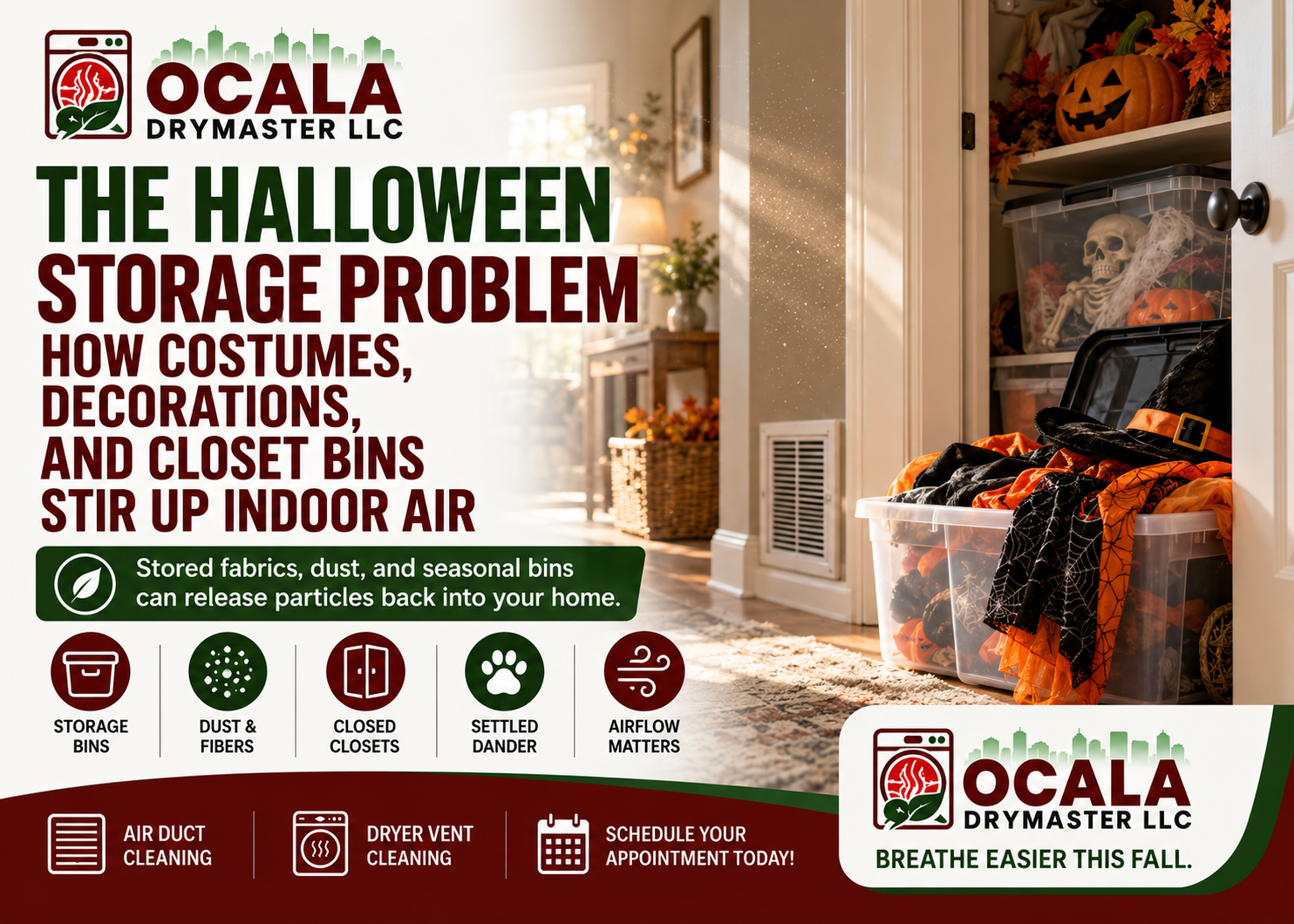
October means Halloween decorations are coming back out.
Plastic pumpkins leave the attic. Costume boxes come down from closet shelves. Artificial cobwebs, blankets, wreaths, fabric decorations, and storage bins start making their way into living rooms again.
It is part of the fun of the season.
However, there is another side to this yearly routine that homeowners rarely think about: the Halloween storage problem.
Items that have been sitting untouched for months can collect dust, fibers, pet dander, pollen, and debris. Once boxes are opened, fabrics are shaken out, and decorations are carried through the house, those particles can become airborne and settle throughout rooms that were clean only minutes earlier.
For Ocala homeowners, seasonal decorating can also happen right when AC runtime begins changing and indoor airflow feels different after summer.
Here is what happens when your Halloween storage comes back into the house — and how to keep the mess from spreading farther than the decorations themselves.
A storage bin may look sealed and clean from the outside.
But where it has been stored matters.
Halloween decorations often spend most of the year in:
Dust settles on lids, handles, fabric bags, and cardboard boxes over time. Garages and attics may also expose stored items to additional pollen and outdoor debris.
As soon as the container is moved, some of that material can become airborne.
Then the lid comes off.
Costumes get shaken out. Artificial garlands are unfolded. Fabric pumpkins get fluffed. Suddenly, months of settled debris are moving through the room.
That is why it helps to wipe down storage containers before carrying them throughout the house.
Hard plastic decorations are easy to wipe clean.
Fabric is different.
Halloween costumes, table runners, decorative pillows, blankets, stuffed decorations, and artificial cobwebs can hold onto fine particles while sitting in storage.
When those items are unfolded or shaken, they may release:
The EPA identifies household dust, pollen, animal dander, and other biological material as common indoor pollutants.
For homeowners, the practical takeaway is simple: do not assume something is clean just because it has been stored away.
Whenever possible, wash washable costumes and fabrics before placing them around the house. For non-washable items, take them outside first and gently remove loose dust before decorating.
The biggest issue is not necessarily the dust sitting on the decoration.
It is what happens after that dust becomes airborne.
If the AC is running while decorations are being unpacked, return vents may pull some airborne particles into the home's normal airflow.
From there, air continues moving through:
That does not mean decorating automatically makes your ductwork dirty. However, if your system already contains seasonal buildup, adding another round of airborne debris can make dust around vents and surfaces more noticeable.
Professional Residential & Commercial Air Duct Cleaning can help address buildup inside airflow pathways that regular surface cleaning cannot reach.
If you are unsure what professional system cleaning actually includes, see What Is Complete Air System Cleaning?.
Reusable plastic bins are not the only Halloween storage containers.
Many families keep older decorations inside cardboard boxes.
Over time, cardboard can shed fibers and collect dust along its surface. Boxes stored in humid areas may also develop a stale storage smell.
When those boxes are opened inside the home, the debris can end up on:
For that reason, October is a good time to replace worn cardboard storage with clean, sealed containers when possible.
It also makes next year's decorating easier.
You finish decorating.
The house looks great.
Then, one or two days later, you notice dust again.
That does not necessarily mean your home suddenly became dirty. Seasonal decorating simply disturbs spaces and objects that may not have been touched for months.
At the same time, foot traffic increases as boxes move from storage areas into living spaces.
If dust already tends to return quickly in your home, read The Invisible Dust Cycle: Why Your Home Gets Dusty Again Days After Cleaning.
Your HVAC filter also deserves a quick look after a large decorating or cleaning session. However, replacing the filter does not clean debris already located elsewhere in the air system. The Air Filter Myth explains that difference in more detail.
October may feel cooler, but Florida humidity does not disappear overnight.
Attics, garages, closets, and utility spaces can expose stored decorations to moisture throughout the year.
As a result, fabrics or cardboard may smell stale when they are first brought inside.
The EPA recommends controlling indoor moisture because excess humidity can contribute to indoor air quality problems.
If an item smells strongly musty, inspect it before bringing it into your living space. Do not simply spray it with air freshener and assume the problem is solved.
The same principle applies throughout the home: addressing the source is more useful than covering the odor.
That idea is explored further in Clean Scents vs. Clean Air: Why Air Fresheners Don’t Fix What’s Circulating Through Your Home.
There is another side of Halloween that arrives at the end of the month.
Laundry.
Costumes, blankets, towels, table linens, and clothing may all end up going through the washer and dryer after parties, decorating, trick-or-treating, or family gatherings.
That means extra lint production.
If your dryer already has restricted airflow, heavier loads can make symptoms more noticeable.
Watch for:
Professional Dryer Vent Cleaning helps clear hidden lint from the vent pathway.
If fabrics are coming out hot but still damp, read Clothes Hot But Damp? The Dryer Vent Warning Sign Most People Ignore.
You do not need to stop decorating.
A few simple habits can reduce how much stored debris ends up moving through the house:
Most importantly, pay attention to what happens after decorating.
If dust disappears after a normal cleaning, there may be nothing else to address. However, if dust quickly returns around vents or certain rooms consistently feel stale, your home's airflow system may deserve a closer look.
You can Book an Appointment if you would like a professional inspection.
Why do my Halloween decorations smell dusty or stale?
They may have spent months collecting dust, fibers, humidity, and storage odors inside closets, garages, attics, or boxes.
Can Halloween decorations make my house dustier?
Temporarily, yes. Moving bins and unfolding stored fabrics can disturb settled particles that then land on nearby surfaces.
Should I change my HVAC filter after decorating?
It is worth checking, especially after heavy cleaning or moving dusty stored items. Replace it when dirty according to the filter or HVAC manufacturer's recommendations.
Does air duct cleaning remove seasonal buildup?
Professional Residential & Commercial Air Duct Cleaning can address debris inside airflow pathways that surface cleaning cannot reach.
Should Halloween costumes go straight into the dryer after washing?
Follow the garment's care instructions first. If your dryer is taking unusually long to dry washable fabrics, consider having the Dryer Vent Cleaning system inspected.
How do I schedule service?
You can Book an Appointment or reach out through Contact Us.
Ocala • Belleview • Summerfield • The Villages • Dunnellon • Silver Springs • Wildwood • Citra • Reddick • Fort McCoy
See complete coverage here: Ocala Drymaster Service Area.
Halloween decorating should change how your home looks — not how clean the air feels.
The Halloween storage problem starts when months of settled dust, fibers, and storage debris suddenly get disturbed and carried back into living spaces.
Cleaning decorations before displaying them, washing stored fabrics, checking your filter, and keeping vents unobstructed can help limit the mess.
If you continue noticing heavy dust around vents or stale airflow after seasonal cleaning, explore Residential & Commercial Air Duct Cleaning, schedule Dryer Vent Cleaning, or Contact Ocala Drymaster to get your home ready for the rest of fall.